17th February happens to be the Chinese New Year of 2026. As we welcome Chinese New Year 2026, the Year of the Horse, symbolizing freedom, energy, and optimism; let’s explore its history, traditions, and global significance.

Chinese New Year: History, Traditions, and Global Celebrations
The Chinese New Year, also known as the Spring Festival or Lunar New Year, is one of the grandest and oldest celebrations in the world. It signifies the beginning of a new lunar year and represents a time of renewal, family reunion, and prosperity.
The festival is not only celebrated in China but also across many Asian countries such as Singapore, Malaysia, Indonesia, Vietnam (known there as Tet), and even among Chinese communities in the United States, Canada, and the United Kingdom. Each region adds its local flavour, yet the essence of family reunion and renewal remains universal.
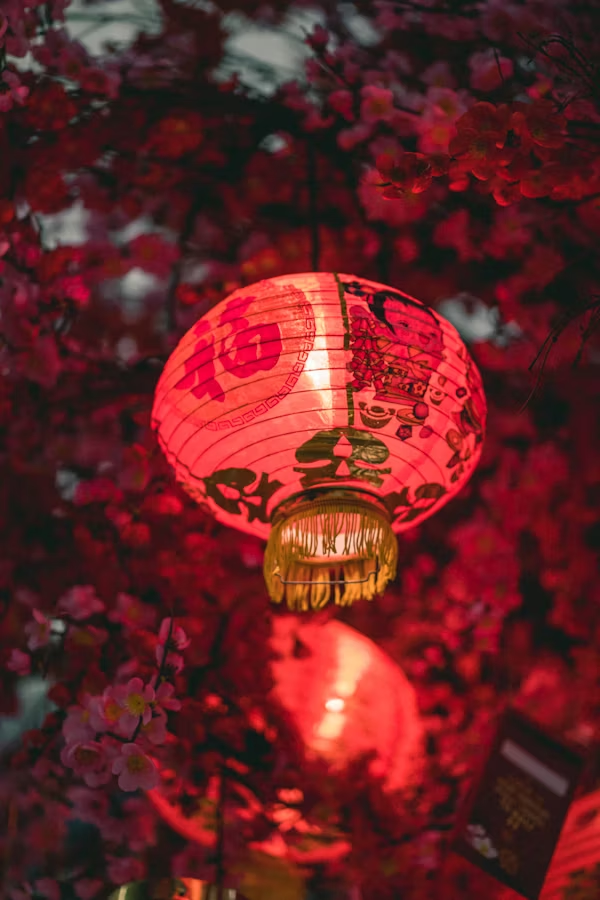
What Is Chinese New Year?
The vast majority of the countries across the world follows Gregorian Calendar format except a few who uses modified version of Gregorian calendar. Thailand (Thai Solar Calendar), Japan (Japanese Calendar), and Taiwan (Minguo Calendar) use the Gregorian structure but with different era years. Some exceptions are there – Ethiopia uses the Ethiopian calendar, which is 7–8 years behind the Gregorian; Iran & Afghanistan use the Solar Hijri calendar for civil purposes, and Nepal Uses Vikram Samvat and Nepal Sambat.
On the contrary, countries like Saudi Arabia, Pakistan, Algeria, and Iran, uses Islamic Lunar Calendar to mark religious events. Interestingly, Chinese New Year marks the start of a new year based on the traditional Lunar Calendar, not the Gregorian Calendar. It usually falls between January 21 and February 20, depending on the moon’s cycle.
Each year corresponds to one of the 12 Chinese Zodiac Animals – Rat, Ox, Tiger, Rabbit, Dragon, Snake, Horse, Goat, Monkey, Rooster, Dog, and Pig.

The Origin and History of Chinese New Year
It is believed that, the Chinese New Year began as a way to protect villagers from a fearsome beast called Nian, a horned creature said to live in the mountains or under the sea. Nian would come out each year during the Spring Festival to attack and eat people, especially children.
One year, an old man stayed behind when everyone else hid. He used red decorations and firecrackers to scare the monster away. The next morning, the villagers found their homes unharmed and realized that Nian feared the colour red and loud noises.
From then on, people celebrated the New Year by wearing red, hanging red lanterns and scrolls, and lighting firecrackers to keep the beast away. According to later tales, Hongjun Laozu eventually captured Nian, ensuring peace for the villagers.
Over time, these rituals evolved into joyful traditions of colour, sound, and symbolism that continue to this day. The Chinese New Year became officially recognized during the Han Dynasty, cementing its cultural importance in East Asia.
In Chinese mythology, the Nian legend also symbolizes humanity’s victory over darkness and fear. The colour red, symbolizing fire, was believed to represent life energy and drive away negative forces. Over centuries, this myth evolved into an enduring metaphor for courage, resilience, and renewal.
How Long Does the Chinese New Year Last?
Unlike most festivals, Chinese New Year lasts for 15 days, ending with the Lantern Festival. Each day holds a special meaning:
- Day 1: Welcoming the gods of heaven and earth.
- Day 2: Married daughters visit their parents.
- Day 5: Businesses reopen on the God of Wealth Day.
- Day 7: Known as “Everyone’s Birthday.”
- Day 15: The Lantern Festival, marking the grand finale of celebrations.
It is one of the most important holidays in Chinese culture and was placed on the UNESCO Intangible Cultural Heritage of Humanity list in 2024. Marking the end of winter and the beginning of spring, this festival takes place from the evening preceding the first day of the year to the Lantern Festival, held on the 15th day of the year.
In addition to UNESCO recognition, the festival has gained worldwide acknowledgment for promoting cultural diversity and community harmony. Cities like San Francisco, Sydney, and London host some of the largest Chinese New Year parades outside Asia, drawing millions of visitors each year.
Pre-New Year Preparations
Chinese people used to celebrate the New Year well in advance with all sorts of things:
- Cleaning the House
- Families deep-clean their homes to “sweep away bad luck” and make space for good fortune. It symbolizes a fresh start and spiritual cleansing.
- Decorating in Red
- Homes are decorated with red lanterns, couplets, paper cuttings, and banners. Red represents joy, prosperity, and protection against evil spirits.
- Reunion Dinner
- On New Year’s Eve, families gather for the Reunion Dinner, the most important meal of the year. Popular dishes include:
- Fish (Yu) – for abundance and wealth.
- Dumplings (Jiaozi) – for prosperity and fortune.
- Nian Gao (Rice Cake) – for progress and growth.
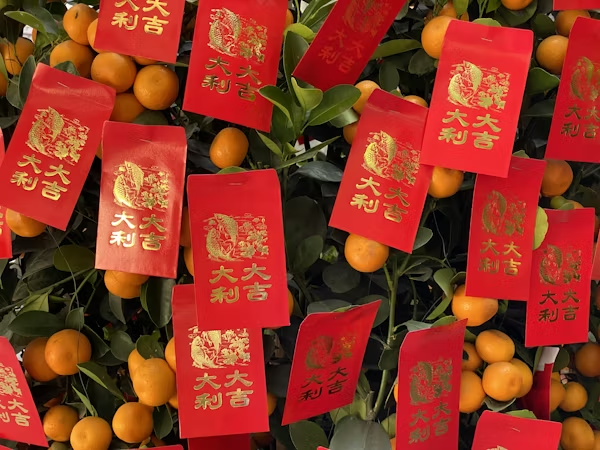
Apart from decorations, families also prepare symbolic items such as oranges and tangerines for good luck, and display Chinese knots, which represent eternal happiness and unity.
Key Traditions and Symbols
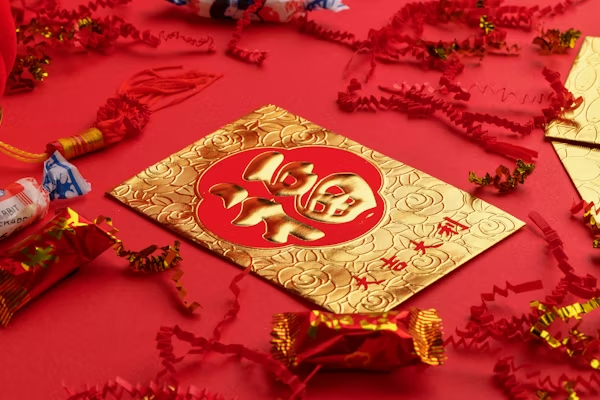
- Red Envelopes (Hongbao)
- Elders gift children and unmarried adults with red envelopes containing money. This symbolizes blessings, good luck, and protection from evil spirits.
- Fireworks and Firecrackers
- At midnight, spectacular fireworks light up the sky to chase away evil and welcome the new year with joy.
- Visiting Relatives and Friends
- The first few days of the festival are spent visiting family and friends, exchanging warm greetings like “Gong Xi Fa Cai” or “Gong Hey Fat Choy”, meaning “Wishing you prosperity.”
Each year’s zodiac animal plays a central role in festivities. For example, 2026 – the Year of the Horse, is believed to bring enthusiasm, adventure, and progress. People born in Horse years are seen as independent, energetic, and free-spirited.
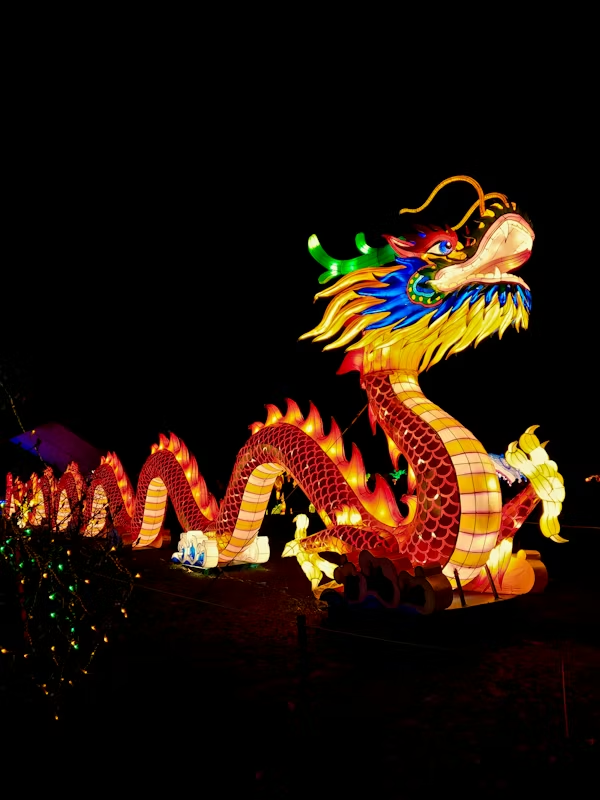
The Lantern Festival: A Dazzling End
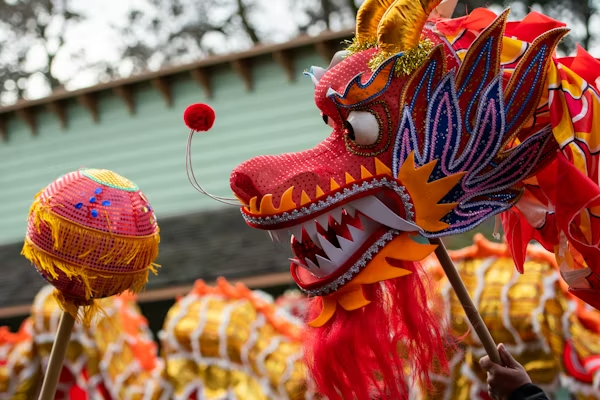
The Lantern Festival marks the end of the Chinese New Year celebrations. Colourful lanterns illuminate streets and temples, symbolizing hope and light for the future. Traditional lion and dragon dances, parades, and the eating of Tangyuan (sweet rice balls) make this day a spectacle of unity and joy.
Lighting lanterns is also considered a spiritual act, guiding lost souls home and symbolizing the bright path of life ahead. It’s a moment of reflection and hope for peace and prosperity in the coming year.
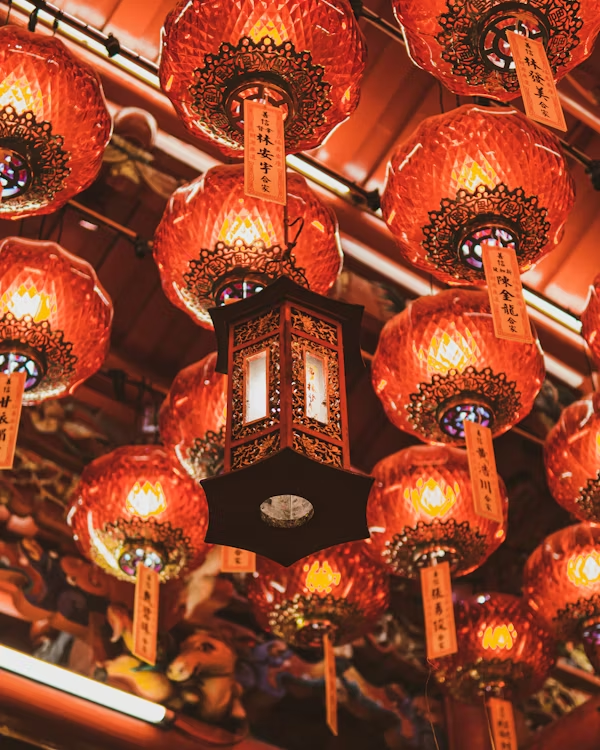
Kolkata, once had a good number of Chinese people, is nowadays the home of only 2000-2500 people in areas like China Town, Tangra, Topsia and Territy Bazar. Mostly are elderly people as the next generation mostly settled in Australia, Canada or America. Still, you are welcome to pay a visit to China Kali Temple where New Year is celebrated as per the rituals, the roads are decorated, gates are erected, dragon dance is on the floor and so many.
With the 300 year old Achipore temple being restored just before the Chinese New Year 2026, people can pay a visit to the temple built in 1718 which is a testament of Kolkata’s first Chinese settlement , established by Tong Achew, who was the first-known Chinese trader who arrived in India. In fact, Achipore village was named after Achew who setup sugarcane cultivation and a sugar manufacturing plant, employing several Chinese workers who had migrated to India at that time. This was the start of Chinese habitat at Kolkata which later extended to Tangra area with leather factories in most of the houses. You can still find a few Chinese shoe stores in the Bowbazar area of Central Kolkata, although it’s a pale shadow of their glorious past.

Chinese New Year today transcends borders. It’s a time when people worldwide, irrespective of nationality; embrace the message of starting anew, cherishing family, and spreading joy. The festival reminds us that even in our fast-paced modern lives, traditions rooted in gratitude and togetherness remain timeless.
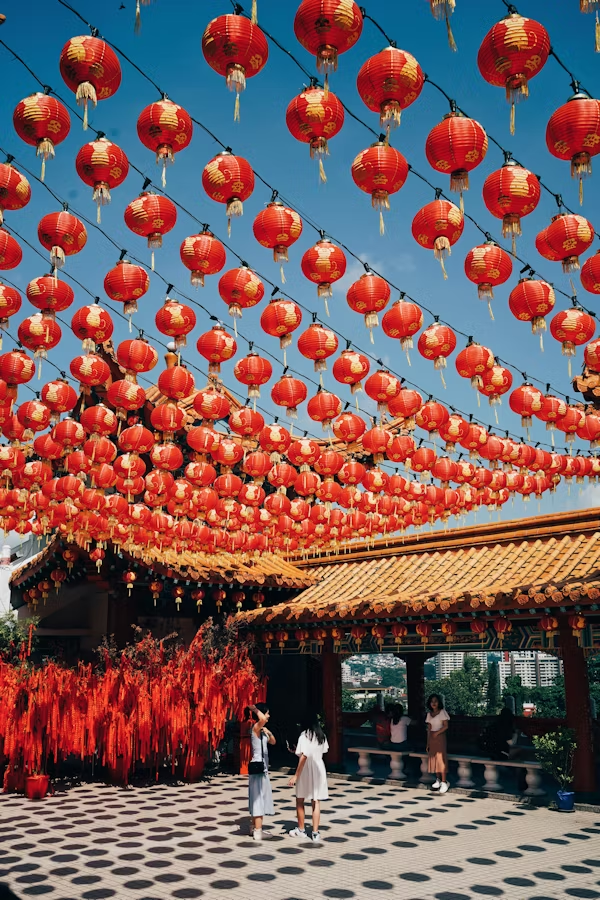
shin nian kuai le (Happy New Year)!!!
Discover more from Saikat Gupta
Subscribe to get the latest posts sent to your email.
Continue your efforts and endeavor to share additional narratives of this nature, particularly regarding Indian Culture.
An insightful and well-documented article.
Really enriched by this post. Thank you for posting!